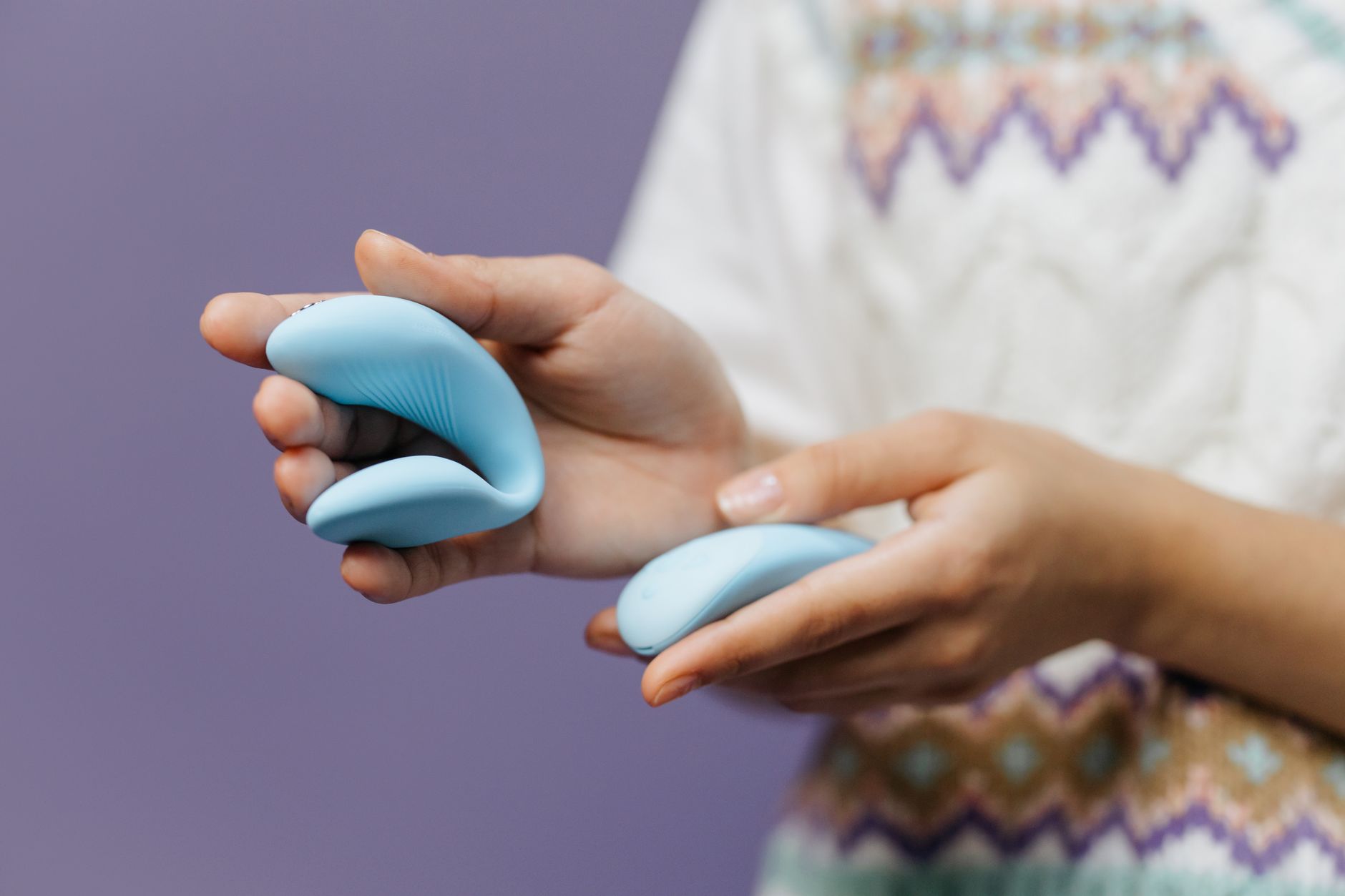
Here's the thing about partners and vibrators
Your partner wants to participate. They see you interested in a clitoral vibrator and they don't want to feel sidelined or like they're being replaced. That nervousness is real, and it's actually the opening for something much better than just solo play. When you bring your partner in intentionally, you're not adding a device to your sex life. You're building a new shared language.
The key difference between a vibrator that feels like a third wheel and one that feels like collaboration comes down to one thing: clarity about whose hand is on it, who decides the rhythm, and what role each of you is playing. Without that, awkwardness lives.
The conversation before you even touch it
Don't lead with the device. Start with desire. Tell your partner what you want from the experience: "I'd like you to help me explore this with you." That's vastly different from "I want to try this thing." The first one includes them.
Then get specific about what you're curious about. Do you want them to hold it? To watch and guide you? To have both hands involved? To follow your tempo or set the pace? These aren't awkward logistics questions. They're the difference between fumbling around wondering what to do and both of you knowing exactly what's happening.
If your partner expresses hesitation, that's data, not rejection. Common concerns: "Will you still want me?" "Am I not enough?" "Will it hurt?" Address them directly. A clitoral vibrator isn't a replacement for their body or their presence. It's a tool that lets you experience sensations neither of you could create alone. That's not subtraction. It's addition.
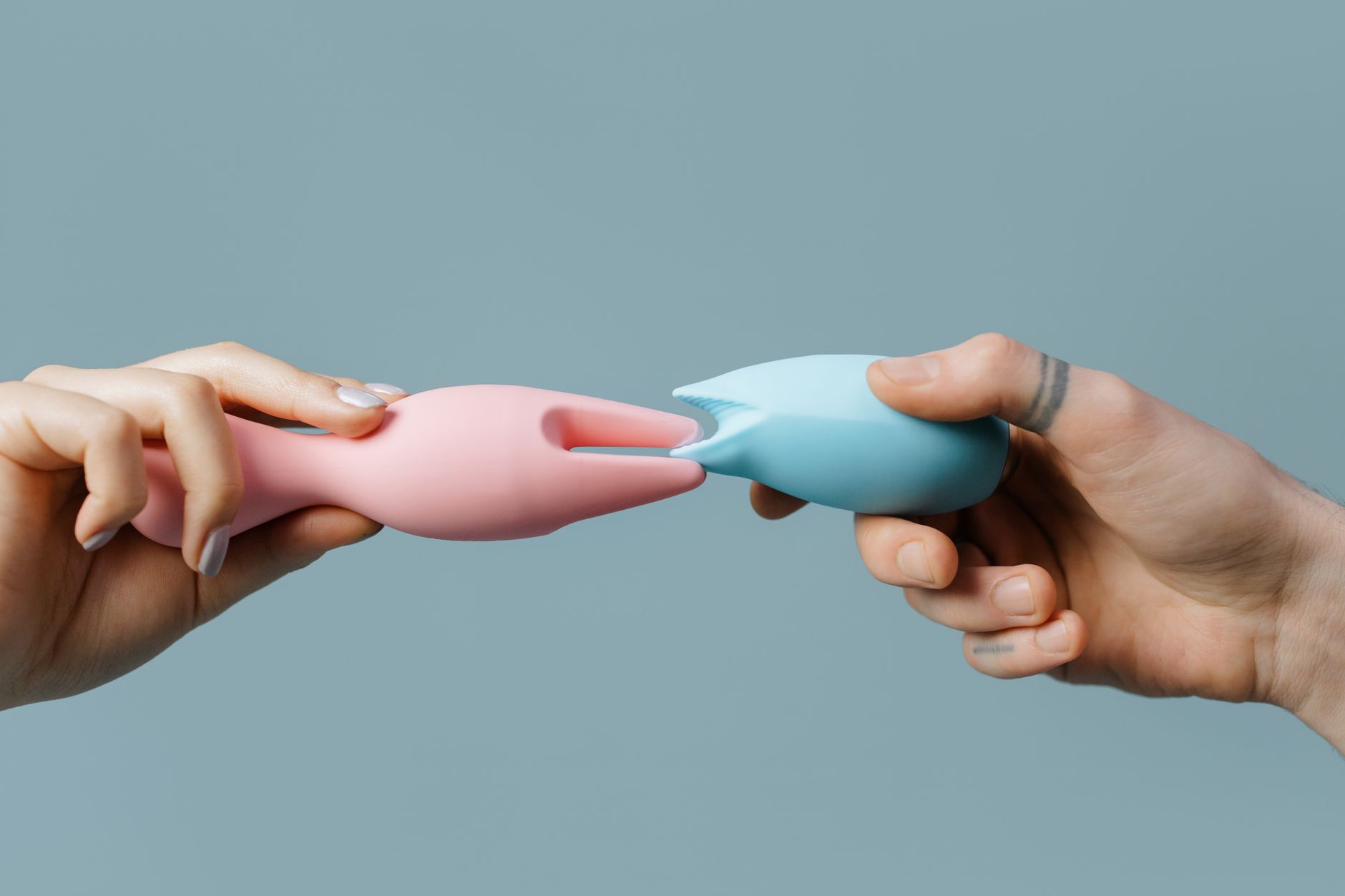
Photo by cottonbro studio on Pexels
Introducing the device itself
Let them hold it first. Not in a sexual context. Just in your living room or bedroom, dry, before clothes come off. Let them see how light it is, how smooth the silicone feels, how quiet it runs. Familiarity kills fear. When they understand the weight and the sound and the basic mechanics, they feel less like they're holding something foreign.
Show them the intensity settings. Most lemon clitoral vibrators have a few levels. Let them play with the dial so they understand the range. "This is the gentlest. This one is stronger." Now they're not discovering the intensity accidentally during sex. They know what's available.
Talk about lubricant. Your partner might not realize that even with arousal, a lube makes everything smoother and reduces friction discomfort. Have your preferred lube already chosen and beside the bed. Make it boring and practical, not mysterious.
The first time actually using it together
Start during foreplay, not as the main event. This takes the pressure off. You're not trying to have the perfect orgasm with a new device. You're exploring. You're curious. That mindset is a game-changer.
Have them apply lube to the vibrator, not just you. This keeps their hands in the equation. Then start with the lowest setting. Let them guide the device around your vulva, following your breathing or your soft cues. You might say "slower" or "a bit to the left." Your partner isn't guessing anymore. They're getting real-time feedback.
This is crucial: your partner should not be holding it still. Motion matters. Slow circles, gentle up-and-down movement, varying the contact. That's where the sensation lives. A stationary vibrator just buzzes. A moving vibrator tells a story.
If your partner gets tired or wants a break, take it. That's not failure. That's information. Maybe you'll hold it for a while. Maybe you'll pause and kiss and reconnect. Maybe you'll go back to their hands on you without the device. The point is that it's collaborative, not a script.
Reading your partner while they're using it
Your partner is probably watching your face and listening to your breath to figure out what's working. Make that easier. Vocalization is a gift. Not porn-star moaning. Just honest signals: "That feels good," "A bit more intense," "Stay right there." Your partner will feel confident and connected when they know they're creating the sensation you want.
If your partner seems hesitant or withdrawn, pause. Not because something is wrong, but because checking in is intimacy. "How are you feeling?" "Are you enjoying this?" "Do you want to shift what we're doing?" These tiny moments of vulnerability are where real couples connection lives.
Common hiccups and how to handle them
You lose sensation or it feels numb. This usually means the intensity is too high too fast. Lower the setting. Give your body time to adjust. Sometimes using a lemon clitoral vibrator after years of high stimulation means retraining your nervous system, and that's completely normal.
Your partner feels awkward holding it. Ask them to hold you with their other hand. A hand on your breast, your hip, your face. They're directing pleasure with one hand and giving physical affection with the other. That's active participation, not sidelined.
The rhythm feels off or robotic. Have a conversation about pace. Does your partner naturally move faster or slower? Can you match their tempo? Can they slow down and follow yours? This is where the partner aspect becomes an asset. You're not just using a tool. You're syncing with another person.
You're not orgasming or it takes forever. That's fine. Not every session with a lemon sucker needs to end in climax. Sometimes the point is exploration and connection. Sometimes your body just isn't ready that day. Sometimes it takes 45 minutes. All of these are normal. Your partner needs to know this upfront so they don't internalize delay as their failure.
Making it a regular thing
Once you've done it once, the nervousness usually evaporates. Your partner now knows the device isn't threatening. They know how to use it. They've watched you respond. The next time feels easier.
As you get more comfortable, your partner might develop preferences too. Some partners love the control of holding the vibrator. Others prefer you holding it while they use their hands elsewhere. Some want to alternate. There's no one right answer. The collaboration matters more than the configuration.
When your partner is still hesitant
If your partner continues to resist even after you've had the conversation, that's not about the vibrator. That's about vulnerability, control, or something deeper. A skilled therapist can help you both explore what's actually underneath the hesitation. Sometimes it's about feeling less skilled or less needed. Sometimes it's about trust. Sometimes it's genuinely just not their thing, and that's okay too.
But here's what I know: when both partners show up with curiosity instead of performance pressure, lemon vibrators become not a thing you do, but a way you connect. The device is just the tool. The trust and communication around it is everything.
Common questions about using vibrators with a partner
What if my partner thinks a vibrator means they're not enough for me?
This is the most common fear, and it deserves a direct answer. A vibrator doesn't replace physical touch or emotional intimacy. It augments sensation in ways a hand or body can't. Think of it like the difference between a massage and a massage chair. Both feel good. They create different kinds of relief. One doesn't devalue the other. Have that conversation explicitly, and remind your partner that you chose to explore this with them, which is its own kind of intimacy.
Is it normal if my partner wants to be involved but seems nervous about the actual mechanics?
Completely normal. Many people have never held a vibrator before. They don't know how much pressure to use, whether to keep it still or move it, how quickly to increase intensity. That's not a reflection on them. It's just unfamiliar. Treating the device exploration like a learning conversation, not a test, changes everything. "Let's figure this out together" is a thousand times better than "Here's how you do it."
Can we use a lemon vibrator during partnered sex, like during intercourse?
Yes, and it can feel amazing for the person with the vulva because you're getting clitoral stimulation plus penetration. The mechanics depend on your positions, but side-by-side or you-on-top tend to work well. One partner can hold the vibrator while the other focuses on movement. Communication matters even more here because you're coordinating multiple sensations and two bodies.
What if using the vibrator together feels awkward or uncomfortable?
Some awkwardness is normal the first time. But if it persists, slow down. Go back to basics. Maybe you use it solo for a few weeks while your partner watches, if they're comfortable with that. Maybe you talk to a sex therapist who specializes in couples. Discomfort that doesn't fade on its own is worth investigating with professional support.
Should my partner be the one controlling the intensity, or should I?
There's no should. Some couples prefer the person receiving pleasure controls the settings and the partner handles the movement. Others do the opposite. Some take turns. What matters is that you've discussed it beforehand so there's no awkward fumbling or power dynamics confusion in the moment. Start with one person in control, and revisit it once you're both comfortable.
How do I encourage my partner if they're genuinely interested but feeling insecure about being involved?
Remove the performance element. Don't position it as "Can you make me come?" Position it as "I want you to explore this with me." Celebrate small things: "I love how you touch me," "That felt good," "I appreciate you trying this with me." Make it about connection and curiosity, not outcomes. Insecurity usually comes from feeling like they need to be perfect or prove something. They don't. They just need to show up.
The bigger picture
Let's be real. A clitoral vibrator is just silicone and electricity. What matters is the conversation you have before you use it, the checking-in while you're using it, and the vulnerability afterward. When your partner wants to help and you let them, you're building something richer than individual pleasure. You're building trust, communication, and a shared willingness to explore discomfort together. That's where the real intimacy lives.
If you're ready to bring this conversation to life, reach out to explore what works for your relationship. And if you need more guidance on how to navigate these moments with your partner, you might find our piece on rebuilding intimacy after relationship distance helpful too.